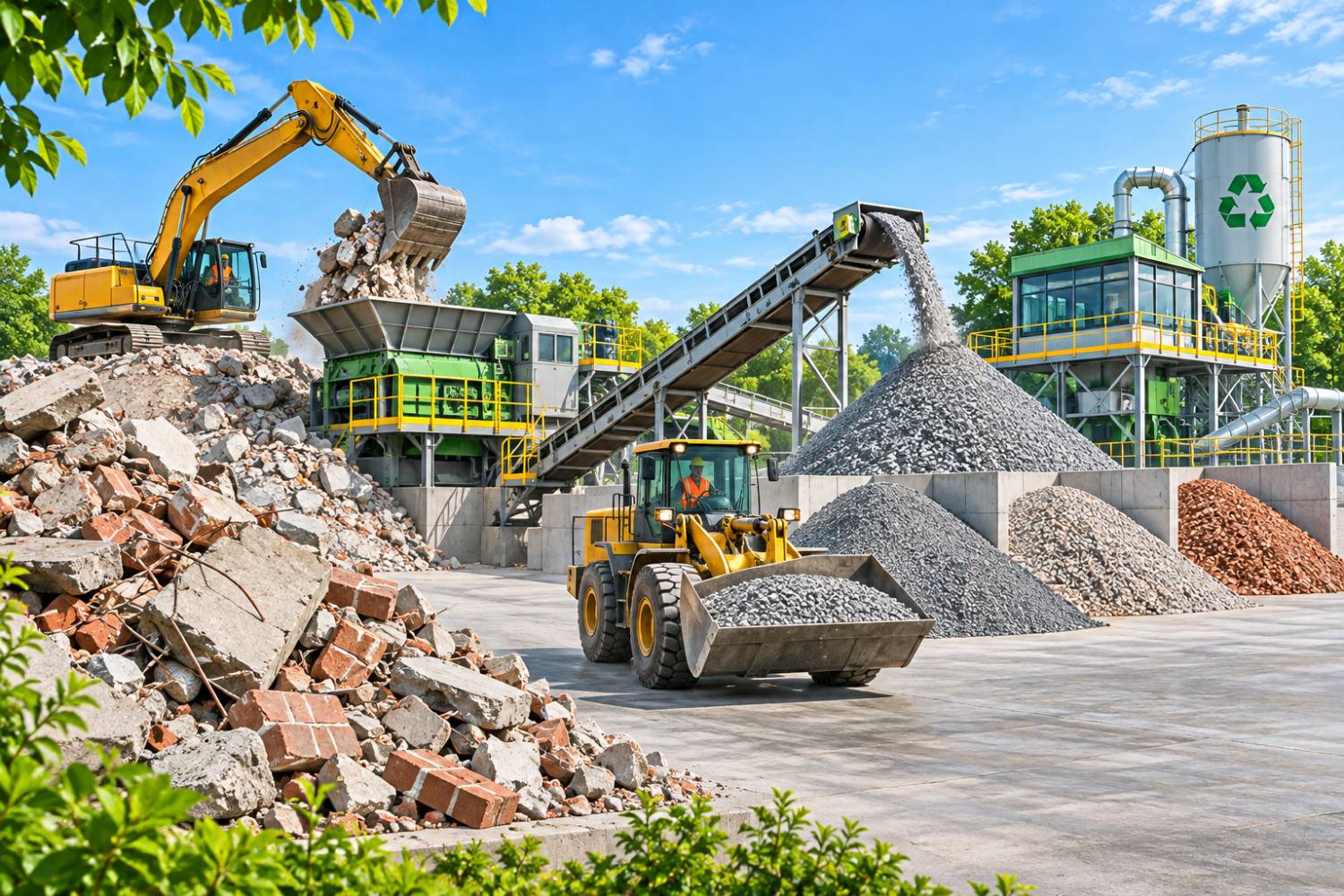
Demolition projects generate substantial amounts of concrete, brick, stone and other construction waste. Traditionally, much of this material was transported away for disposal. However, suitable demolition rubble can be processed into recycled aggregates, creating opportunities to recover valuable resources, reduce waste management costs and support more sustainable construction practices.
Modern crushing and screening equipment makes this process more practical for contractors and recycling operators. A mobile impact crusher can process suitable demolition materials into smaller, reusable pieces, helping businesses recover useful aggregates while reducing their dependence on newly quarried materials.
What Is Aggregate Recycling and How Does It Work?
Aggregate recycling involves converting suitable construction and demolition waste into materials that can be reused in building and infrastructure projects.
Concrete, bricks and certain types of stone can often be crushed, screened and graded to produce recycled aggregates. Depending on their quality and specification, these materials may be suitable for road sub-bases, construction fill, drainage applications and other engineering purposes.
The process begins with identifying recoverable materials and separating them from unsuitable waste. Crushing equipment reduces larger pieces into manageable sizes, while screening machinery separates the processed material into different grades.
However, not every demolished material is suitable for recycling. Contamination, material composition and intended use must all be considered before processing begins.
Why Recycling Demolition Rubble Makes Financial Sense
Recycling demolition waste can provide financial benefits, although profitability depends on operating costs, material quality and local demand.
Transporting rubble to disposal facilities involves vehicle movements, fuel consumption and handling expenses. Processing suitable materials closer to the demolition site may reduce these costs, especially when recycled aggregates can be reused locally.
Recovered materials may also have commercial value when they meet the specifications required by potential buyers.
However, recycling is not automatically profitable. Businesses must consider equipment hire or purchase costs, labour, maintenance, fuel, testing and regulatory compliance.
A realistic financial assessment should compare the total recycling cost against disposal expenses and the value of the recovered material. Understanding these figures helps contractors identify whether recycling offers a worthwhile commercial opportunity.
The Role of Crushing Equipment in Aggregate Recycling
Crushing machinery is central to converting bulky demolition rubble into usable aggregates.
Different crushing technologies are suitable for different materials and processing requirements. Jaw crushers generally use compression to break larger pieces, while impact crushers use high-speed impact forces to reduce material size.
A mobile impact crusher can be particularly useful where contractors need to process suitable concrete, brick and other demolition materials at different locations.
Mobile equipment can be repositioned between work areas, reducing the need for a permanent crushing installation. However, suitable access, ground conditions, operating space and environmental controls are still essential.
Equipment selection should reflect the material being processed, required output sizes, production capacity and operating conditions.
Choosing the wrong machinery can increase wear, affect material quality and create unnecessary operating expenses.
Essential Steps for Producing Quality Recycled Aggregates
Producing commercially useful recycled aggregates requires more than crushing rubble into smaller pieces.
A structured recycling process helps improve material consistency and reduce contamination.
- Inspect incoming material: Identify suitable concrete, brick and stone before processing begins.
- Remove contamination: Separate timber, plastics, plasterboard, hazardous materials and other unsuitable waste.
- Prepare oversized rubble: Reduce large pieces where necessary to ensure safe feeding into crushing equipment.
- Crush suitable materials: Select appropriate machinery and settings for the required aggregate sizes.
- Screen processed material: Separate crushed aggregates into grades suitable for their intended applications.
- Check material quality: Arrange appropriate testing to confirm compliance with relevant specifications.
- Store finished aggregates: Keep different grades separated and protect them from further contamination.
Consistent processing and quality control help produce materials that are easier to reuse or supply commercially.
Maintaining Aggregate Quality and Market Value
The commercial value of recycled aggregates depends heavily on their quality, consistency and suitability for the intended application.
Buyers may require specific particle sizes, grading, strength characteristics and limits on unwanted materials. Aggregates intended for engineering applications must meet the relevant project requirements.
Poorly separated demolition waste can introduce contaminants that reduce material quality or make the finished product unsuitable for reuse.
Regular inspection, appropriate testing and accurate records help establish confidence in recycled materials.
Businesses should also identify potential customers before committing to large-scale production. Local demand, transport distances and project specifications can influence whether recycled aggregates are commercially viable.
Managing Environmental and Safety Responsibilities
Aggregate recycling must be carried out with appropriate environmental controls and safe working practices.
Crushing and screening activities can generate dust, noise and vehicle movements. Suitable suppression measures, equipment maintenance and careful site organisation help manage these issues.
Operators must also consider machinery guarding, safe access, falling materials and the movement of heavy vehicles.
In the UK, waste processing activities may require environmental permits or relevant exemptions, depending on the operation and location.
Recycled aggregates may remain legally classified as waste unless applicable end-of-waste requirements are satisfied. Contractors should confirm the relevant rules before selling or reusing processed materials.
Professional environmental advice can be useful when handling unfamiliar materials, establishing processing facilities or assessing regulatory obligations.
Planning a Profitable Aggregate Recycling Operation
Successful recycling requires coordination between demolition planning, material recovery and aggregate production.
Contractors should assess the expected volume and composition of rubble before selecting processing equipment. Understanding these factors helps determine whether on-site recycling, mobile machinery hire or an established recycling facility offers the most practical approach.
Operational planning should also account for storage space, loading equipment, maintenance requirements and material transportation.
Tracking processing costs, recovered quantities and finished aggregate sales provides useful information for evaluating financial performance.
Careful planning reduces avoidable expenditure and helps businesses identify realistic opportunities to generate value from demolition waste.
Final Thoughts
Aggregate recycling allows construction businesses to recover useful materials from demolition rubble while potentially reducing disposal costs and demand for newly quarried aggregates. Commercial success depends on proper material separation, consistent processing, quality control and a clear understanding of operating expenses.
Using suitable machinery, including a mobile impact crusher, can support efficient recovery where site conditions and material requirements permit. Before investing, assess the available rubble, regulatory responsibilities, processing costs and local demand to determine whether recycling offers a financially sustainable solution.